
Full review in English · GL SERIES ITALIA
An enemies-to-lovers story with no real enemies, a romance with no heat, and a series devoted to fire that cannot produce even a spark: The Fire brings 4 Elements (@4elementsGL) to a close in the least fiery way imaginable.
The fourth and final instalment in the project produced by North Star Entertainment (@NorthStar192430) should have been the most visceral, passionate and explosive. Instead, it is the flattest, most predictable and most anonymous. Rather than the culmination of an ambitious GL saga, it feels like a second-rate drama assembled from tired clichés, interminable crying and direction that never manages to find a voice of its own. The story relies on one of the genre’s most overused conflicts: a hostile relative standing in the way of a relationship, forcing the two women involved to prove that their love is valid. The cliché itself is not necessarily the problem. The problem is the series’ complete failure to do anything interesting with it.
At first, The Fire appeared ready to deliver something the genre often promises but rarely earns: a genuine enemies-to-lovers arc. There was friction between Fai and Khaoprao, along with resentment and old wounds that seemed worth exploring. Then the third episode arrives and dismantles the entire premise. Fai never truly wanted to hurt Khaoprao; her apparent hostility was largely the result of her aunt’s interference and a string of misunderstandings.
With a single revelation, the series extinguishes its own setup. We are not watching love emerge through the resolution of a genuine conflict, but an existing love being smothered by poor communication. If one honest conversation between adults can bring the entire narrative structure crashing down, this is not enemies-to-lovers. It is a misunderstanding stretched across an entire season.
From that point onwards, it also becomes difficult to view Fai’s behaviour as romantic. Her “I hurt you because I do not know how to love you” attitude does not make her complex; it makes her emotionally immature. Being the youngest and most sheltered of the cousins may explain her naïvety, but it does not justify a woman nearing thirty handling her feelings through petty retaliation and provocation. Khaoprao ultimately becomes not only the more mature partner, but the only one forced to approach their relationship like an adult.
The central paradox is that The Fire never generates any real emotional heat. The conflict fails to catch because it is quickly hollowed out, yet the transition into romance is equally incapable of producing the tension promised by both the title and the premise.
Fai and Khaoprao move from misunderstanding to a relationship because the screenplay decides that the time has come, not because their connection gradually gains intensity before our eyes. We see several affectionate moments, but very few reveal why these women desire each other, choose each other or cannot bear to stay apart. The Fire tells us that they are in love, but rarely makes us feel it.
Cooling the series down even further is a remarkably passive directorial approach. The framing is largely functional, while the camera movements rarely contribute anything to the storytelling. The camera records events without interpreting them, producing images that are technically competent but devoid of personality.
Pfuse’s (@Fuse_kitti) directorial signature, so recognisable in The Air and The Water, is completely absent here. This is not a subtler version of her style, nor is it simply less immediately visible. What is missing is the visual sensitivity that once allowed the characters’ emotions to be translated into images. The Fire could have been directed by an anonymous hand and, visually, very little would have changed.
The pacing also suffers from a runtime padded with overlong, largely inconsequential sequences. The scenes at the water park, rather than developing the relationship, play like a promotional advert: they pile up smiles and moments of fun without adding any depth to the couple. The same is true of the numerous crying scenes, a recurring weakness in many GL productions. Lingering on the protagonists’ tears for several minutes does not automatically make a scene moving. Without proper emotional groundwork or credible narrative consequences, crying becomes a substitute for writing. Emotional insistence is not emotional depth.
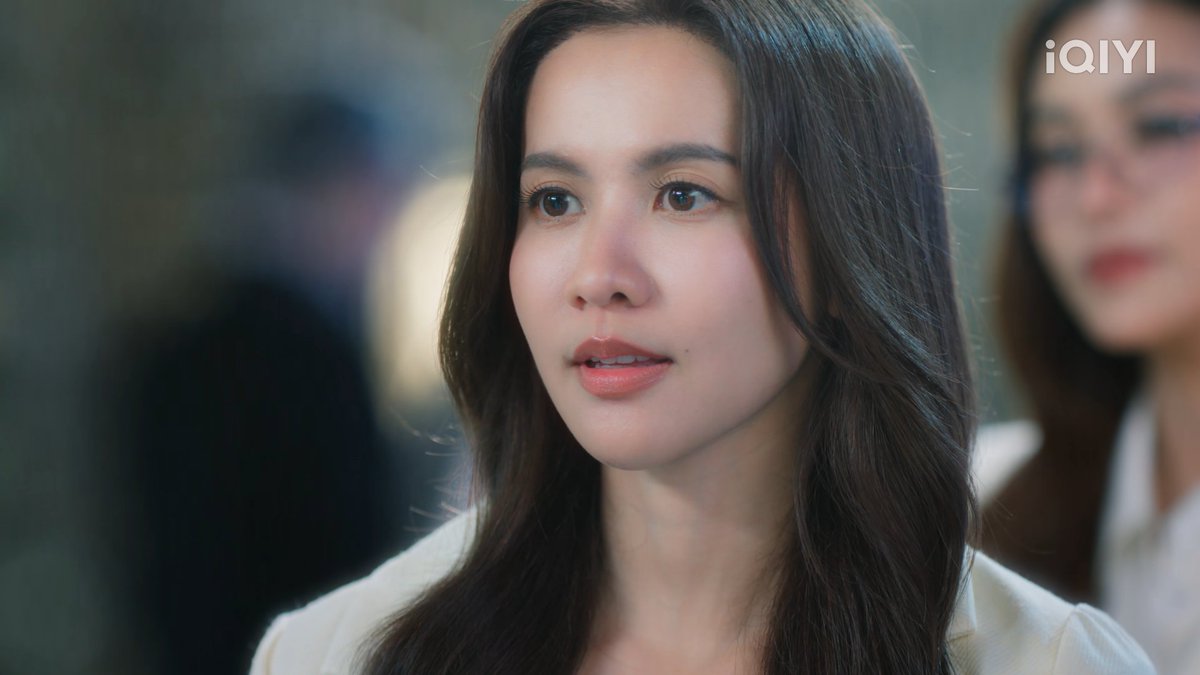
Namneung Milin Watinthanakit (@Milinyahhhh) and Noey Kanteera Wadcharathadsanakul (@lookmaewmiaow) deliver solid rather than exceptional performances. Noey Kanteera is ultimately more convincing, largely because Khaoprao is supported by more coherent characterisation, while Namneung Milin is hamstrung by writing that too often mistakes Fai’s vulnerability for childishness. Both actresses approach the material professionally, but neither can provide the intensity missing from both the page and the direction.
Overall, The Fire is the weakest chapter of 4 Elements. This is not an amateur production, which only makes its mediocrity more conspicuous. The work of a professional crew has resulted in something that feels more like a technically competent exercise than a series with an identity of its own. It also leaves the distinct impression of having been put together too quickly, without giving the writing, direction or performers enough time to realise its potential.
The end result is subpar not because the necessary resources were unavailable, but because there was no clear vision capable of using them effectively. The premise deflates, the direction offers no momentum, and the central relationship never reaches the intensity it promised.
Despite its title, The Fire neither burns, warms nor illuminates. It is damp wood: inert, producing nothing but smoke and never managing to catch alight. By the time the credits roll, all that remains is the boredom of having spent an entire season waiting for a blaze that never began.